
The Dacian Crown - Stolen, Buried and Quietly Returned
The Dacian Crown was never lost; its return speaks in silence.
FINE ARTS
Ana Cocioaba
4/18/20263 min read
A 2,500-year-old golden helmet is stolen in a brazen nighttime robbery. Over a year later, it is found, and the circumstances of how it got there leave many questions unanswered.
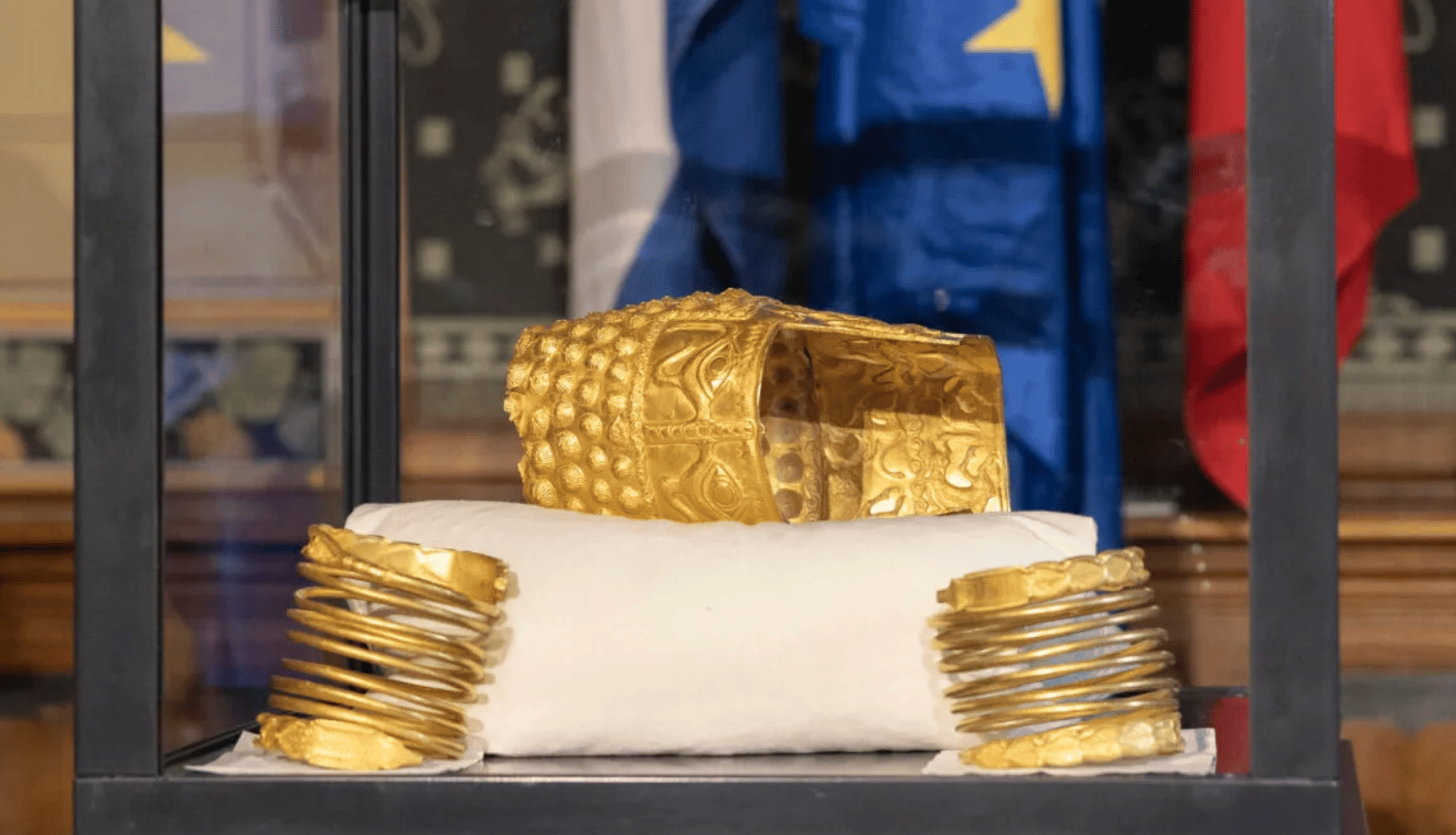
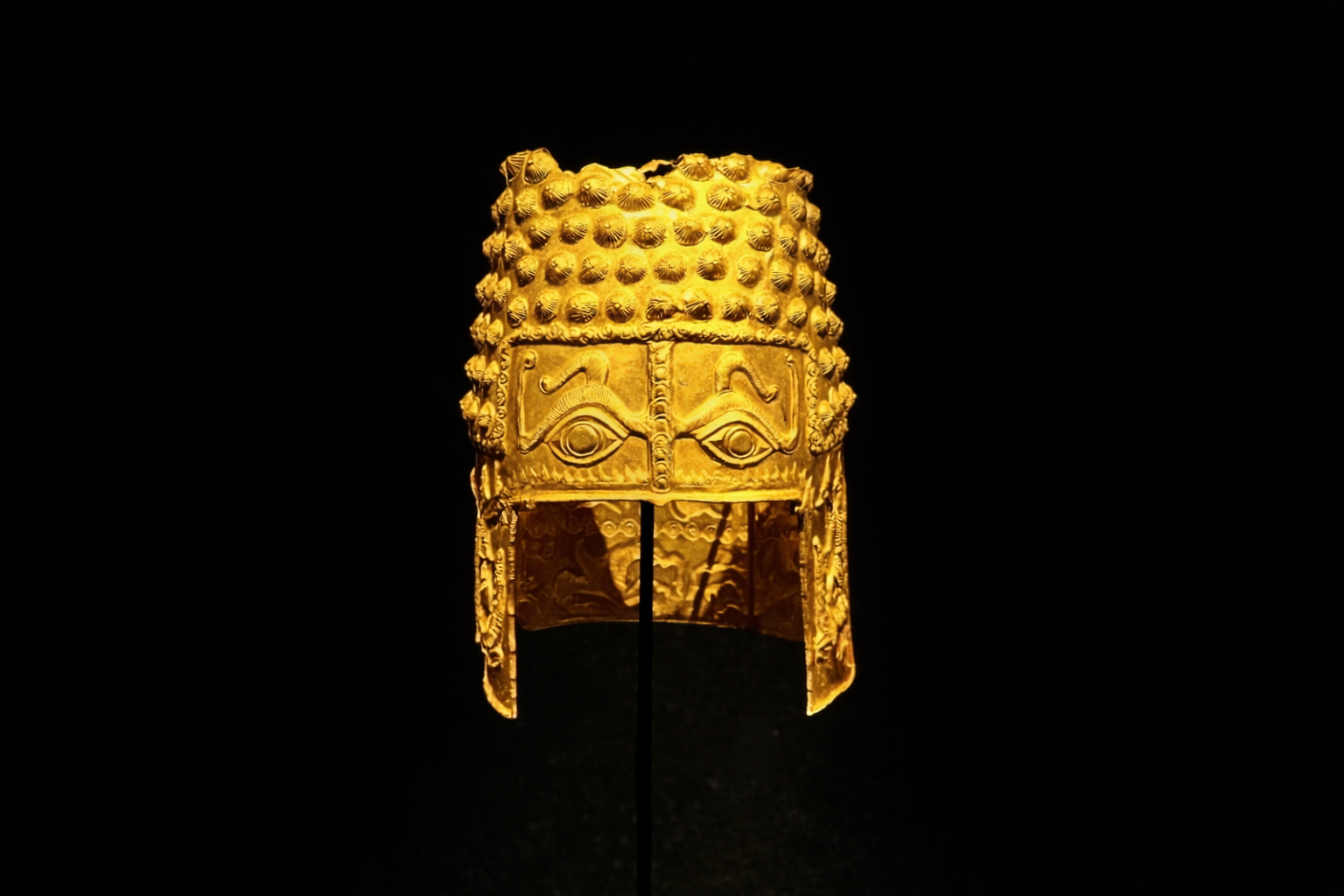
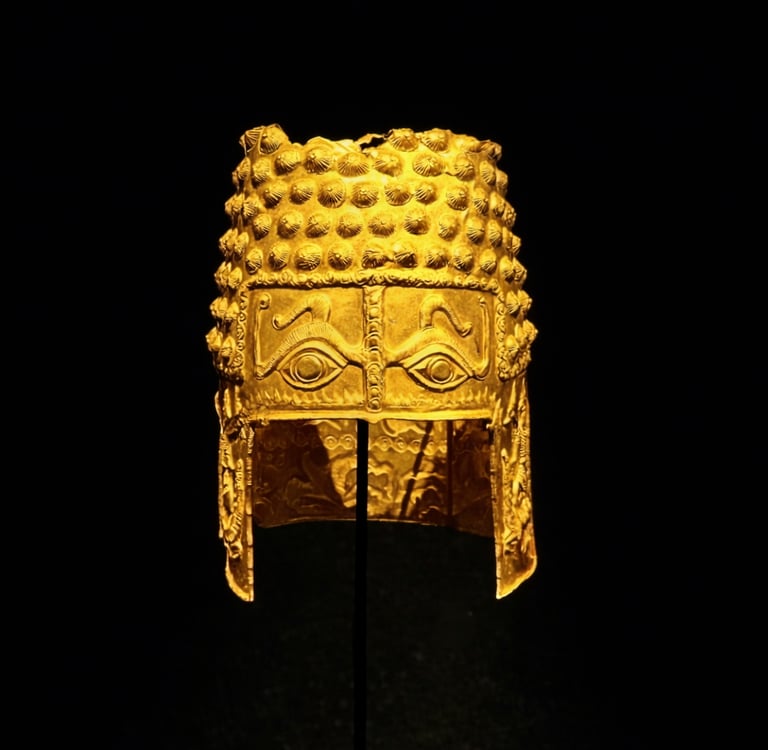
It began with an explosion. In the very early hours of January 25, 2025, robbers blew open the door to the Drents Museum in Assen, The Netherlands, smashed display cases in a Dacia-Kingdom of Gold and Silver Exhibition, and disappeared before morning. The items stolen had been loaned to the museum, the Helm of Cotofenes, a 5th-century BC artifact made of solid gold with images of mythical animals, ritual locations, and eyes that are engraved on the gold, which were thought to protect the wearer from good and evil; and three large gold bracelets were stolen along with the helmet.
The theft was shocking in Romania; the Minister of Culture fired the museum's director days after the robbery. By September 2025, the museum received a €5.7 m insurance payment. Three suspects were arrested, and those individuals were men between the ages of 21, 35, and 37 from a small town in the Netherlands. Authorities offered to cut their sentences in half if they revealed where the artifacts were hidden. An undercover officer reportedly posed as a criminal middleman and offered one of them €400,000 for the same information. A public reward of €100,000 was put on the table. The suspects said very little.
Almost 3 months after the museum had lost its treasure forever, or so it seemed, Dutch prosecuting attorneys on April 2, 2026, conducted a press conference within the museum from where these objects were originally stolen and at the press conference unveiling the helmet as well as two bracelets presented to the press reveal these were also returned via a legal agreement made through respective attorneys without anyone knowing. At the time of the press conference, the helmet had one dent and broken tape from a previous restoration effort; however, each bracelet was in excellent condition with no signs or repairs. At this time, one of the bracelets remains missing and will be unknown if it will ever be returned.
After more than a year of silence, the helmet turned up — reportedly buried, in a location that has never been publicly disclosed. How the authorities came to know exactly where to look remains unclear. That detail alone is worth sitting with for a moment.
The world of collectors is a quiet one. Exclusive, private, and not particularly interested in outside attention. When money has covered every ordinary pleasure, rare and unrepeatable things tend to become the next frontier. And some things truly are one of a kind — not just valuable, but irreplaceable in a way that no amount of money can fully account for. Mummies, for instance, are extraordinary — but in the time of Ramesses II, everyone of standing was mummified; there are hundreds. An Impressionist painting is remarkable, but there are dozens of them scattered across the world's great museums. The Pyramids of Giza are utterly unique — but no one can own them. And then there are the things that are both singular and possessable. Tutankhamun's collar. Darwin's journal. The notebooks of Leonardo. A Dacian golden helmet, made over two thousand years ago by hands we will never know, worn perhaps by a king or a priest at the edge of the ancient world — there is only one.
It is exactly this singularity that gives it its pull and makes it easy for it to be lost to people who have no good intentions.
When a suspect and authority figure agree upon a quiet deal (the return of items from unidentified locations in exchange for a reduced penalty), it can be difficult to trust that their version of events represents the complete truth.
The Drents Museum incident is not an isolated example; rather, it reflects a much older and tragic continuing saga related to Dacian heritage. For many years, treasure hunters searched the hills surrounding Sarmizegetusa, the ancient spiritual capital of the Dacian Empire located in the Carpathian Mountains, using metal detectors and excavators to recover gold with minimal disturbance. Twenty-four enormous spiral gold bracelets were retrieved during this search and were later relegated to black market transactions worldwide; only thirteen have ever been reported returned to Romania.
Goana după aurul dacic — The Hunt for Transylvanian Gold (2017)
This documentary tells that story in full — the looters, the dealers, the black market networks stretching across Europe and North America, and the decade-long investigation that tried to bring the bracelets home. It is genuinely gripping, the kind of thing that is very easy to start and very hard to stop. You do not need any background knowledge to follow it — it takes you in from the first minutes. It is right there on Netflix, searchable in English as The Hunt for Transylvanian Gold. Well worth an evening