
Private Jets and Carbon footprint: The Dilemma of Responsible Luxury
CARS & TRANSPORT
Emma Falchetti
12/1/20253 min read
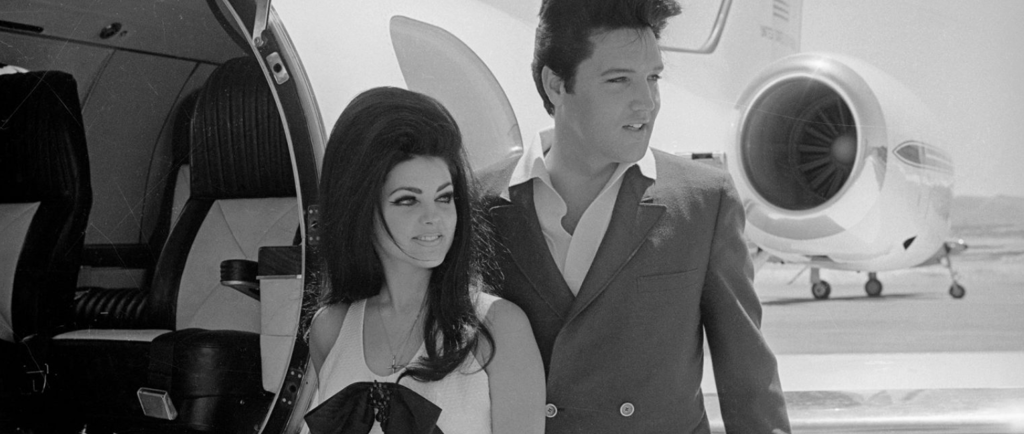
In the hierarchy of modern luxury, few experiences rival stepping aboard a private jet. The quiet hum of the engines, the soft scent of leather, the effortless passage through security — it is exclusivity distilled. Yet beneath the polished veneer of private aviation lies a growing tension: in a world obsessed with sustainability, can the ultimate status symbol survive its own emissions?
The Jet Age and Its Icons
Private jets emerged as the defining accessory of postwar affluence. When Bill Lear launched the Learjet 23 in 1963, he redefined business travel overnight. By the 1980s, Gulfstream and Dassault had turned private aviation into an art form: sleek, whisper-quiet cabins soaring above the constraints of commercial flight. The celebrities, CEOs, and heads of state made their love for it apparent, not only for convenience but for the identity too. A jet wasn’t transport; it was a signature.
Today, over 23,000 private aircraft operate worldwide. Almost half of those are American, but the share of European and Middle Eastern jets is increasing. Each year, the sector carries about 4 million flights, many for distances under 1,000 kilometers-the very routes where sustainable alternatives are most viable. And herein lies the paradox: while representing less than 0.04% of global flights, private jets contribute roughly 2% of aviation’s total CO₂ emissions – an outsized impact for such an exclusive mode of travel.
Luxury Under Scrutiny
The turning point came during the pandemic. As commercial aviation shut down, demand for private charters skyrocketed. Year 2022 was the busiest one on record for the industry – and the moment environmental scrutiny reached new heights. European watchdogs like Transport & Environment calculated that the average private jet emitted 5 to 14 times more CO₂ per passenger than a comparable commercial flight. Suddenly, the image of the jet-setting elite was colliding with the urgency of climate accountability.
Social media amplified the debate. In 2022, flight-tracking accounts revealed the shortest flights celebrities like Taylor Swift and Kylie Jenner took, were just 17 minutes long. What once symbolized freedom began to symbolize excess. The optics of luxury changed almost overnight.
A Quiet Revolution Above the Clouds
Still, the world of private aviation is not a static one. Manufacturers and operators have come to realize that, for survival – reputational as much as economic – change is unavoidable.
The most promising answer coming from the industry so far is Sustainable Aviation Fuel, or SAF, manufactured from waste oils, bio-residues, and even captured carbon. SAF can reduce lifecycle emissions by as much as 80% compared with conventional jet fuel. To date, Gulfstream, Bombardier, and Dassault have all committed to expanding SAF compatibility across their fleets.
Operators like VistaJet and NetJets have begun integrating SAF into their supply chains, offering clients the ability to offset or directly reduce their emissions. Meanwhile, the European Business Aviation Association supports a roadmap toward net-zero emissions by 2050-a bold yet imperative vision.
Parallel to fuel innovation, startups are experimenting with electric and hybrid propulsion for short-haul flights. While fully electric jets are still a decade away, prototypes from companies like Eviation and Lilium suggest regional, zero-emission private air travel may soon be a reality.
A Redefinition of Luxury
But technology alone won’t redeem perception. The deeper challenge lies in redefining what luxury itself is. Historically, luxury has been about more: more space, more speed, more privacy. The new paradigm prizes intelligence over indulgence: discretion, environmental consciousness, and design that whispers rather than shouts.
To many entrepreneurs of the new generation, flying private is no longer about spectacle but optimization — saving time while minimizing footprint, pairing privilege with purpose. The notion that “responsibility is the new exclusivity” is slowly but surely taking hold.
The Sky Ahead
It would be naïve to claim private jets will ever be truly sustainable; exclusivity by definition resists scale. Yet dismissing the industry outright misses the broader transformation underway. Just as the Orient Express once evolved from steam to sustainability without losing its allure, private aviation may find redemption not through denial, but through reinvention.
The next era of luxury flight will not be defined by who flies higher, but by who flies smarter. And perhaps, in the quiet efficiency of a jet powered by renewable fuel — cruising at 40,000 feet above the noise of contradiction — lies the most modern form of prestige: elegance with a conscience.