
LVMH Strategic Moves: Toward Hard Luxury
WATCHES & JEWELLERY
Letizia Garbelli
1/18/20264 min read
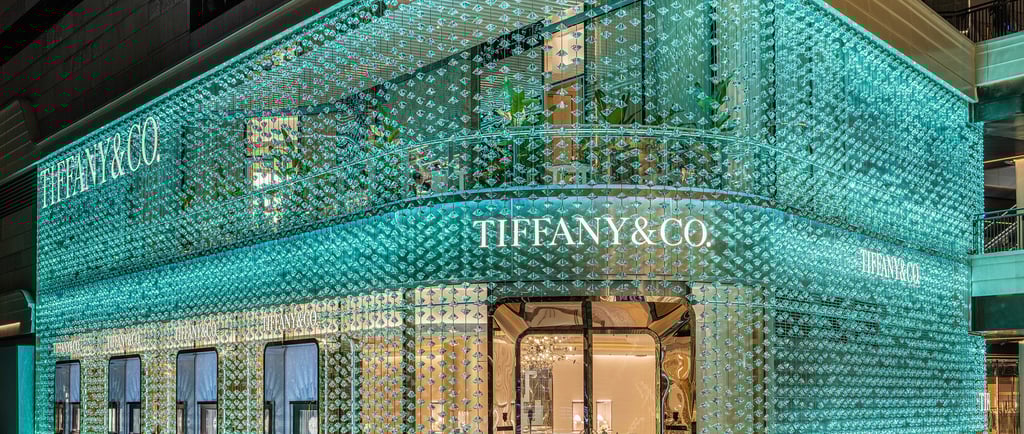
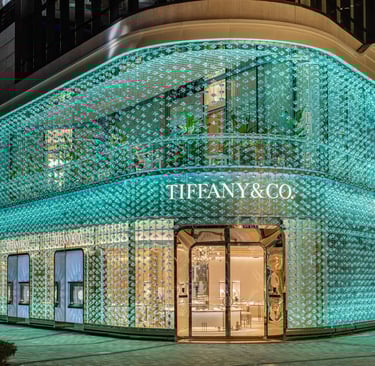
Over the past decade, the global luxury industry has witnessed a substantial shift toward the hard luxury segment- primarily high-end jewelry and watches – which has emerged as a fundamental growth driver for major conglomerates. In accordance with this trend, the acquisition of Tiffany & Co by LVMH Moët Hennessy Louis Vuitton stands as a decisive turning point for the group’s long- term competitive strategy, repositioning toward high-value, less cyclical categories.
The Watches & Jewelry segment experienced an upward trend in 2025. Perceived investment value, demographic diversification, and market consolidation are among the factors that best explain the resilience of hard luxury even in an adverse macroeconomic environment characterized by rising interest rates, geopolitical instability, and declining discretionary spending in other markets. Indeed, W& J brands’ authenticity and craftsmanship not only outperform trend-driven categories, but also lead younger consumers to a greater interest in branded jewelry rather than unbranded pieces, resulting in benefits for the major Maisons. The growing interest in hard luxury is furthermore strengthened by the perception of the long-term investment value that jewels and high-end watches have, partially decoupling buyers from short-term consumer sentiment. The rising rate of the W& J segment might eventually be explained in the light of market consolidation, where larger groups with vertically integrated production and global retail networks are absorbing market share from independent players. Against such a backdrop, LVMH’s choice to expand in the field of hard luxury seems to be structurally aligned with evolving demand patterns.
LVMH Before Tiffany
Before Tiffany & Co. acquisition by LVMH, the group already had a respectable presence in watches and jewelry segment , with names like Bvlgari, Chaumet, Fred, Repossi, TAG Heuer, Hublot, and Zenith. Even though being individually impressive as maisons, they lacked the global retail scale and cultural penetration of their direct competitors, like Richemont, whose Cartier and Van Cleef & Arpels brands, in high-end manufacturing. And unlike some competitors, LVMH lacked a truly iconic, American-anchored jewelry brand with worldwide recognition. It was a gap that became increasingly visible as the luxury market globalized. In this specific perspective, it might be said that the acquisition of Tiffany & Co. in 2021 —a USD 15.8 billion deal—was designed to exactly cover this structural void.
The addition of Tiffany strengthened LVMH’s position in hard luxury along several critical dimensions, to begin, it lead to a portfolio enhancement through a global power brand, as few names in jewelry carry the instant recognition of Tiffany. With nearly two centuries of history, a strong pop-culture presence, the iconic Tiffany Blue Box, and its deep cultural association with engagements and celebration, Tiffany is the kind of brand that elevates an entire portfolio simply by joining it. For LVMH, integrating Tiffany immediately strengthened its profile in hard luxury.
A Strategic Boost in the U.S. Market
Tiffany’s strong American footprint gave the group something invaluable for its dominance in the US jewelry market – the largest in the world- that is a geographic balance at a time when Asian and European demand was showing signs of unpredictability.
Furthermore, this aligns with LVMH’ long-term strategy as well, aimed at :
reducing reliance on fluctuating Chinese demand,
reinforcing its prestige positioning in North America,
and capturing spending from both local consumers and tourism in key U.S. cities.
Industrial Strength and Vertical Integration
Beyond its brand power, Tiffany also brought something more behind the scenes: real industrial capability. in-house diamond sourcing and cutting, strong manufacturing infrastructure, and an extensive retail network, dovetail with LVMH’s broader push for vertical control—a strategic priority evidenced again by the group’s 2025 minority investment in La Joux-Perret, a Swiss movement manufacturer. Vertical integration in watches and jewelry means better quality control, stronger margins, and increased traceability—something modern, sustainability-minded luxury consumers increasingly expect.
Fresh Energy and New Value Potential
After the acquisition, LVMH initiated a multi-phase brand revitalization:
a new visual identity,
more ambitious product development,
a greater focus on high jewelry,
star-powered campaigns and strategic collaborations,
and the complete transformation of the Fifth Avenue Landmark.
These actions repositioned Tiffany closer to the upper tier of luxury jewelry, where margins are higher and brand equity compounds more rapidly.
Hard Luxury Becomes a Growth Engine
By pairing Tiffany with its existing maisons, LVMH has created a more cohesive, competitive hard- luxury division. Growth now comes from shared expertise in sourcing, manufacturing, and marketing, a deeper push into high jewelry, and stronger innovation pipelines in watchmaking. Most importantly, Tiffany is becoming a key pillar of the group’s earnings diversification. As fashion and leather goods—LVMH’s traditional powerhouse—face cyclical ups and downs, watches and jewelry offer stability, durability, and long-term brand value.
Looking Ahead: Why the 2025 Trend Matters
The Watches & Jewelry segment continued to show positive momentum in 2025, despite an unpredictable global economy. This signals three important trends: to begin, hard luxury is becoming structurally stronger, not just cyclical. Furthermore, consumers increasingly see branded jewelry and timepieces as long-term, investment-style purchases. Large groups like LVMH benefit from their scale, retail control, and integrated capabilities. It also suggests that LVMH’s Tiffany bet was not just timely—it was strategic. And it sets the stage for future expansion, particularly in watchmaking and industrial know-how.
To conclude, LVMH’s acquisition of Tiffany & Co. was more than just a high-profile deal; it was, indeed, a turning point. The group secured an iconic global brand, strengthened its presence in the vital U.S. market, and gained unique operational capabilities that reinforced its long-term strategy. As 2025 confirms the resilience of the watches and jewelry sector, LVMH’s vision becomes increasingly clear. Hard luxury isn’t simply another category in the portfolio; it’s becoming one of its core engines of value creation—powered by vertical integration, brand elevation, and a competitive advantage smaller players can’t easily replicate.