
In Orizzonti | Rosso: Valentino’s Red is it a color or a lifestyle?
In Rome, red is not a color but a declaration.
FINE ARTS
Charlotte Blackburn
11/20/20242 min read
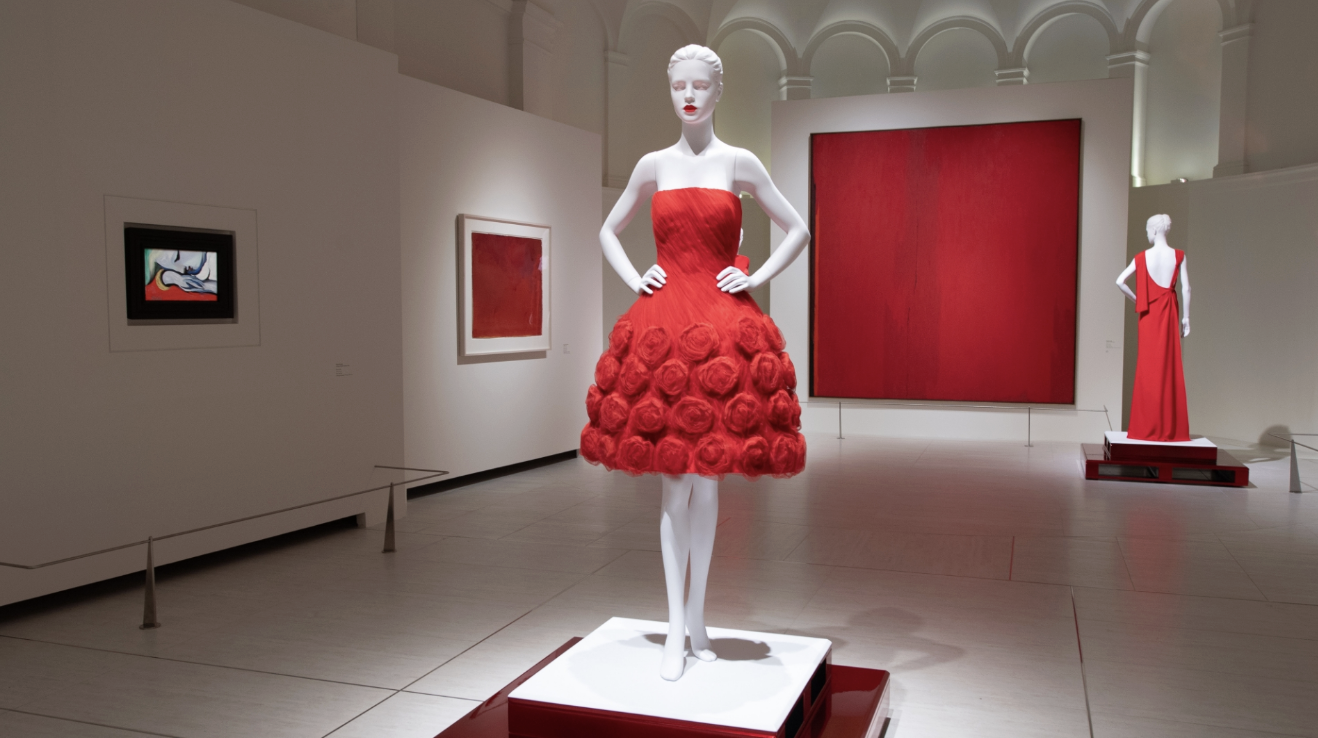
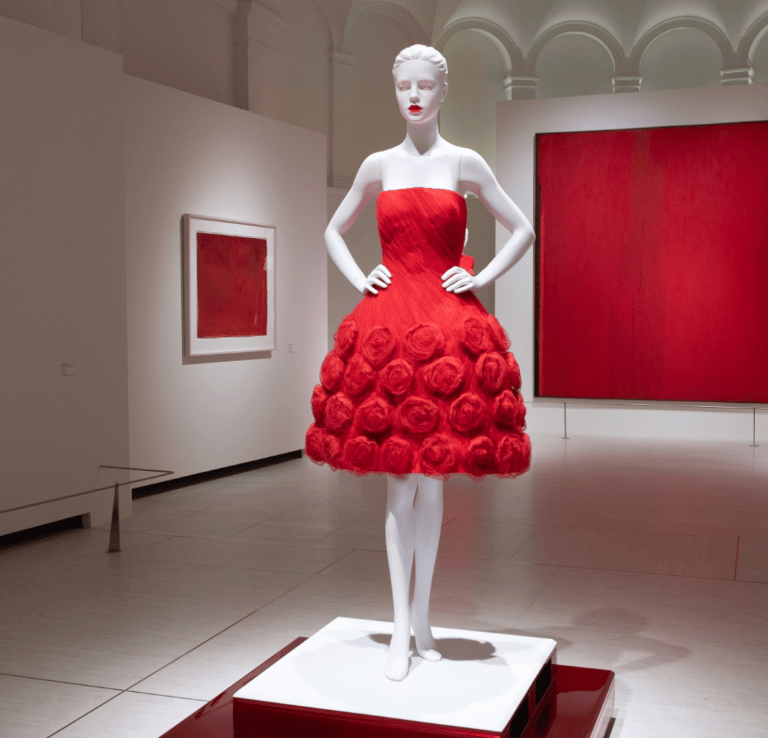
In Rome, red is not a color but a declaration. Dating back to prehistoric times, being the first pigment that humans mastered, manufactured and reproduced, first in painting and then in dyeing. Whether it was because it was seen as the colour of the Empire, worn by generals, emperors, and soldiers due to its latin meaning associated with strength, or its association with Catholicism and the cardinal’s robes. Therefore it is no coincidence, Valentino Garavani followed this pattern making red central to his creations, he wanted to follow and adopt the Roman tradition, mixing passion and power, like he did with his famous “Fiesta” dress of 1959. Therefore with the opening of the Orizzonti | Rosso, the inaugural exhibition at PM23, the newly opened Valentino Garavani and Giancarlo Giammetti Foundation, red was the main subject.
As Valentino Garavani once stated “I love red, it’s not a colour, it’s a flag.” This exhibition continued and emphasized these famous words. Curated by Pamela Golbin and Anna Coliva, they made sure to raise the flag once again, this time in the gallery by displaying fifty archival couture creations with thirty works by numerous artists such as Louise Bourgeois, Damien Hurst and Andy Warhol. By pairing gowns with diverse artwork pieces, it allowed the visitor to experience red in all its senses, seeing it as a spectrum of intensities.
Throughout the centuries, red had a dual meaning, power and seduction, which was each assigned to both luxury and art respectively. Moreover in art, it has been the colour of divine sacrifice; and in couture, it signals allure and confidence. Hence, this can be seen in Valentino’s gowns because he understood and implemented this duality. In the exhibition, the curators invite us to see red not as fabric, but as cultural pigment, a colour that has painted both canvases and identities. In Valentino’s work, red evokes glamour, seduction and celebration; in the modern-art pieces, red becomes abstraction, rupture, even trauma. As the curators comment : the colour functions as both surface and depth, as presence and absence.
Orizzonti | Rosso shows how similar an artist and designer can be sharing a thought for colour, light and texture. Additionally, it makes sure to emphasize that fine art and luxury converge through emotion, not commerce. It shows that when a colour holds history, it ceases to belong to a brand and begins to belong to culture. Valentino’s red, once a code of couture, has become central for memory, meaning, and desire.
Ultimately, the exhibition reminds us that beauty remains the essential characteristic of art. As Immanuel Kant once wrote, beauty is that which “pleases universally without concept”. At the very entrance of Orizzonti | Rosso, a mirrored inscription greets visitors: “I love beauty, it’s not my fault.” Which is a fitting statement for both Valentino and his city. In Rome, red, like beauty, is eternal.