
Beyond the Bob: A retrospective on Anna Wintour’s Vogue
FASHION
Federico Fattori, Ioana Rusu
6/13/20262 min read
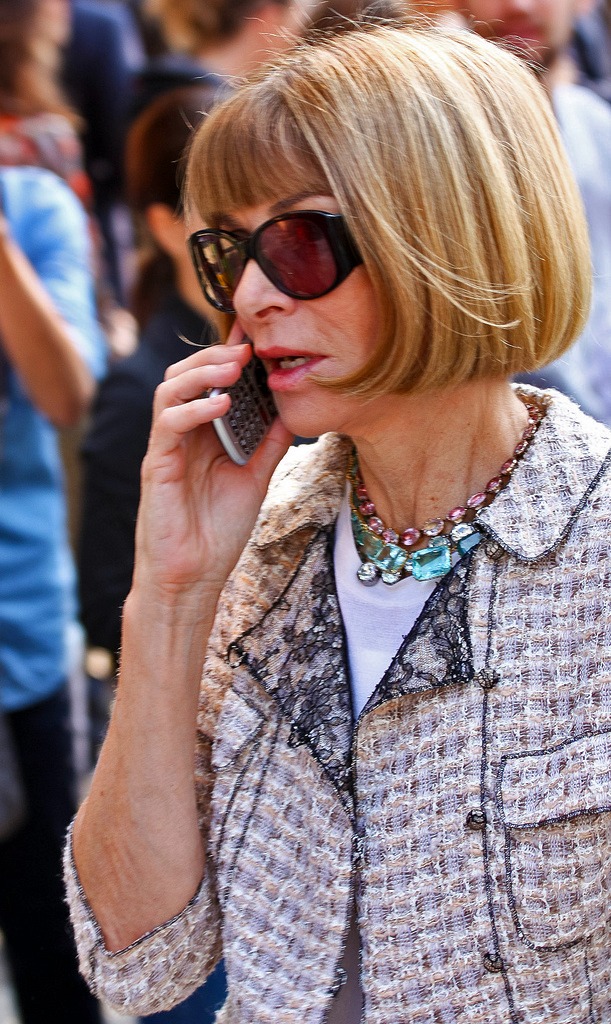
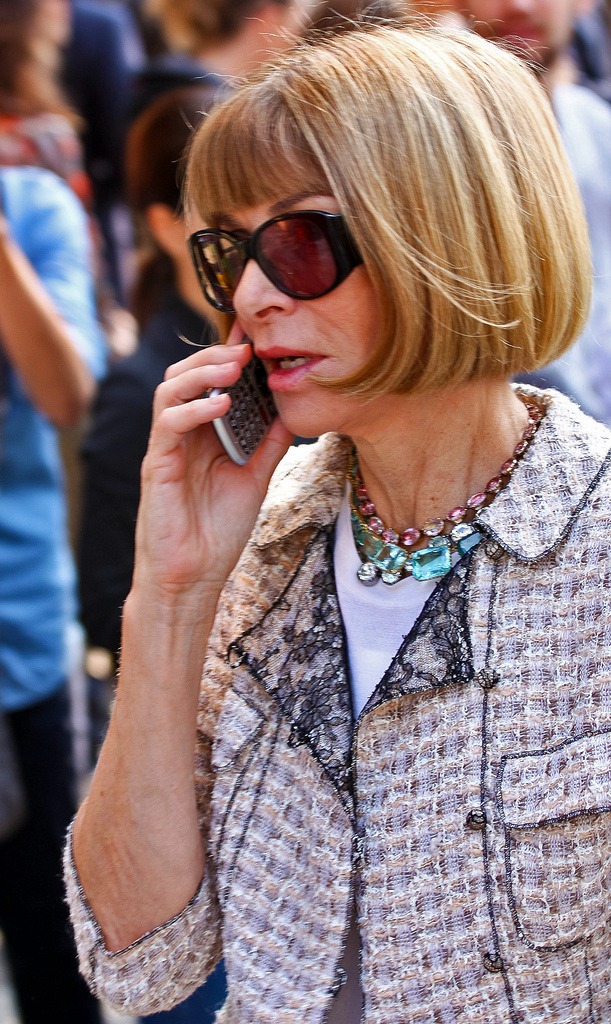
Already accompanied by her bob and her attitude, ‘Nuclear Wintour’, as she was nicknamed during her tenure at British Vogue, had her way of handling things set in stone since the beginnings of her career. Over the course of the 70s and 80s Anna Wintour worked at an array of different magazines, from Harper’s Bazaar to House and Garden and Viva, later arriving at Vogue, becoming editor-in-chief of British Vogue in 1986 and later of American Vogue in 1988.
At the time a stagnating magazine losing ground to competitors like Elle. From the very the first cover curated by Wintour winds of change could be felt, the brushstrokes of an innovator clearly seeable on the glossy cover; featuring a $10,000 Christian Lacroix top paired with a $50 pair of stonewashed Guess jeans, the incorporation of lowbrow clothing was a clear gash on the stiff and rigid hull of fashion imagery, and a clear sign of Wintour’s willingness to push the magazine into new domains.
Between the 1990s and the 2010s Wintour made Vogue more about culture than strictly fashion, pioneering the centering of celebrities within the fashion discourse. Alongside monumental covers with age-defining stars, from Madonna in 1989, to Hillary Clinton and Beyonce in 1998 and 2018, she also featured new and relatively unknown models on the cover, helping them propel their career. What Wintour did was to associate fashion with culture in the broader sense, giving it more credibility as a powerful industry capable of shaping society, and nothing more than the impact the annual Met Gala has to prove this statement. Wintour took over its organisation in 1995, and through the glamorous looks worn by celebrities, a secret party and the scarcity of invites, it was shaped into the prestigious event we know it as today. Furthermore her championing of designers like Alexander McQueen, Thom Browne, Marc Jacobs, and John Galliano was crucial in defining characters whose work still defines and inspires that of today’s designers.
Wintour’s power was also institutional. Through the CFDA/Vogue Fashion Fund, launched with the CFDA after 9/11, she helped create a formal pipeline for emerging designers, offering not only money but mentorship and legitimacy. In this sense, Vogue under Wintour did not simply report on fashion; it helped decide who would be allowed to enter its highest ranks. Combined with her transformation of the Met Gala into fashion’s most visible annual ritual, this made Wintour less an editor than an architect of the modern fashion system.
Her long tenure was not without controversy, as Vogue was accused of being elitist and slow to respond to the demand for diversity within the fashion system, proving how the power she surrounded herself with could also become a limitation to an ever-changing world.
In June 2025 Anna Wintour stepped down as Vogue’s editor-in-chief, leaving the reins to Chloe Malle, new head of editorial content, retiring the old editor-in-chief model. But “Nuclear Wintour” is far from uninvolved, remaining Vogue’s global editorial director, and Condé Nast’s chief content officer. In the 37 years she spent directing American Vogue, Wintour was never afraid to speak her mind, doing things the way she wanted to. Her glacial and perfectionist ways were able to elevate the fashion world into cultural relevancy, shaping it into an immense industry with the power of swaying culture.
Wintour’s legacy is not simply that she edited Vogue, but that she changed what the magazine could be; no longer just a magazine, but a celebrity platform, a political stage, a museum partner, a fundraising machine, and a career-making institution for models and designers.